University and College Union (UCU) members have voted to go on strike at UEA from Monday 25 November through up to Wednesday 4 December over a dispute about the national pension scheme.
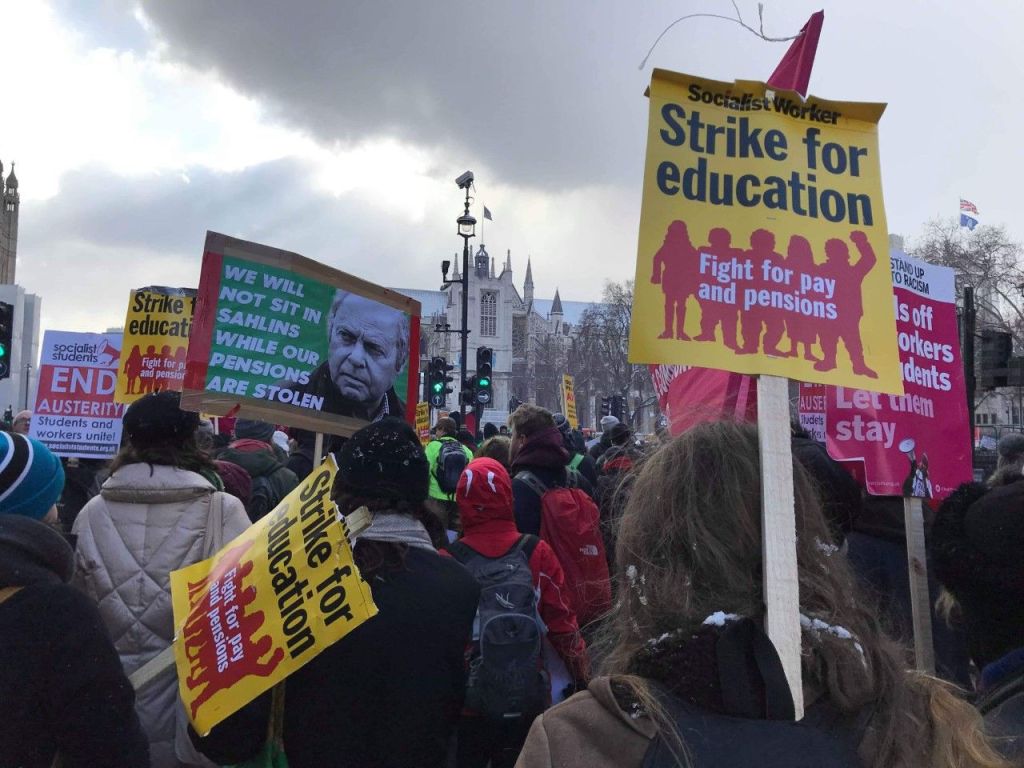
Earlier this month, University and College Union (UCU) members voted in favour of industrial action and then announced that staff in 60 universities across the UK, including UEA, are set for eight days strike. The strikes are the result of two separate disputes: one on pensions and one on pay and working condition. UEA has chosen to go on strike over a dispute over pensions alone. And the outcome of lengthy negotiations with UCU is that UEA has agreed to pay an extra £3m per annum into the pension scheme.
In recent years, the cost of providing defined benefit pension in the UK has risen because people living longer, and the economic environment has been challenging. Many defined benefit schemes have closed because of increasing costs. Under pension law, more money needs to go into the scheme so Universities Superannuation Scheme (USS) can pay pension in the future. Universities want USS to remain a valuable staff benefit, and are paying 21.1% of salary, which is high compared to most other workplace pension. Members now face steep rises in their pension contributions – from 8% last year to 9.6%, equivalent to an additional 30 pound per month for the average scheme member (before tax relief).
According to estimates, more than a million students could be affected by this action. Especially makes international students feel anxious. According to Top Universities, international students paying up to GB£38,000 (US$53,700) per year for university tuition, so the strike is high price to pay. In addition, students are preparing for the final exam and homework when the strike occurs, a time when they need academic supports more than ever.
To deal with this situation, UEA said that the University will be open as normal throughout the strike. The Library and Student Services will continue to be open on all of the strike days. However, some lectures, tutorials, seminars, lab work and assessments may be affected. According to UEA: “The University will act to minimize the impact of any actions such as the cancellation of classes or course tests. We will seek to either reschedule events or offer alternative learning opportunities if an event cannot be rescheduled.”
 XIAOTONG LI NEWS